Which Indian Business Coaches with Operating Experience Built Their Own Companies?
Evidence-led review of Indian business coaches with operating experience, separating verified company records from unsupported claims.

By Rohini Mundra, Founder · Updated 11 Oct 2026

In brief
We name only practitioners whose company, accountable role, and dated scale milestone can be documented, and we separate operating evidence from client results, course sales, awards, and social reach. We also give you a source hierarchy, scorecard, and buyer questions for choosing private coaching or a peer community at the ₹50 lakh to ₹1 crore stage.
In this article
- 1Which Indian Business Coaches with Operating Experience Have Verifiable Records?
- 2What Counts as an Operating Record?
- 3Evidence Ledger
- 4What the Ledger Does Not Prove
- 5What Counts as Proof That a Coach Built and Scaled a Company?
- 6Founding, Operating, and Scaling Are Different Claims
- 7How Do You Verify a Coach’s Revenue Claims?
- 8Use a Five-Level Source Hierarchy
- 9Score Evidence Before You Score Chemistry
- 10Ask These Questions Before You Buy
- 11What Support Fits a ₹50 Lakh Founder Who Wants to Scale Lean?
- 12When Private Coaching Is the Better Fit
- 13When a Peer Community Is the Better Fit
- 14Use Fit, Not Fame, as the Final Filter
- 15Why Work with Rohini Mundra?
- 16FAQs on Indian Business Coaches with Operating Experience
Choosing a coach at a meaningful revenue stage should involve more than reputation. For context, Marico reported ₹13,611 crore in consolidated FY26 turnover in its FY26 disclosures, illustrating the difference between a visible expert and a publicly documented operating record.
Indian business coaches with operating experience should be included only when public records identify a company, a founder or accountable operator role, and a dated scale milestone. Our review finds one documented coaching practitioner, Ankur Warikoo, and one operator-led peer-community founder, Harsh Mariwala, while excluding unsupported revenue and client-result claims.
We explain the evidence standard, what each record does and does not prove, and how to assess fit before you buy hands-on coaching.
Which Indian Business Coaches with Operating Experience Have Verifiable Records?
We use a deliberately narrow inclusion rule. A coach needs more than a large audience, a respected award, or strong client stories. We need to see a named company, a dated founder or operator role, and an independently documented milestone that clears the ₹1 crore threshold.
What Counts as an Operating Record?
A founder is someone documented as creating or co-founding a company. An operator is someone with accountable leadership responsibility, such as CEO, managing director, or a comparable executive role. Scaling requires a dated financial, transaction, or audited milestone tied to that company.
For the coaching practitioner included below, independent reporting stated that Nearbuy reported ₹92.98 crore of FY2015-16 revenue while its co-founder and CEO was in role. That is stronger evidence than a biography alone because it connects a named operator to a named company and a dated metric in reported revenue.
Evidence Ledger
| Coach Or Operator | Company | Founder Or Operator Role | Sector | Dated Milestone | Source Type | Source Link | Evidence Date | Confidence |
|---|---|---|---|---|---|---|---|---|
| Ankur Warikoo | Nearbuy | Co-founder and CEO | Local commerce | ₹92.98 crore revenue in FY2015-16 | Attributable financial reporting | 2016 | 4/5 | |
| Harsh Mariwala, operator-led community context | Marico and ASCENT | Marico chairman and promoter, ASCENT founder | FMCG and peer learning | Marico FY26 turnover of ₹13,611 crore | Primary company disclosure | FY26 | 5/5 |
What the Ledger Does Not Prove
The first row supports operating experience in a consumer internet business. It does not prove that the same person is the right coach for a founder-led service firm, or that a course, mentorship, or client engagement will reproduce the same outcome.
The second row belongs in the conversation because peer communities can be valuable for established founders. It is not evidence of private-coaching fit. If your service business has stalled, begin by diagnosing the service revenue plateau before assuming any impressive operator background solves the specific constraint.
What Counts as Proof That a Coach Built and Scaled a Company?
We separate business evidence from credibility signals because buyers often encounter them together. A company can have considerable reach, fundraising, or media attention without producing a clear record of profitable operations or repeatable execution.
For unlisted businesses, the Ministry of Corporate Affairs allows users to inspect certain incorporation documents, annual returns, and balance sheets through its paid public-document service. That makes legal-entity research more useful than relying only on a polished personal story or a testimonial page, as explained in its MCA guidance.
Founding, Operating, and Scaling Are Different Claims
Founding speaks to ownership or creation. Operating speaks to accountable execution. Scaling speaks to the company’s commercial progress over a defined period. A credible coach may have one, two, or all three, but we should not let one stand in for the rest.
| Claim Type | What It Can Demonstrate | What It Cannot Demonstrate | What We Record |
|---|---|---|---|
| Annual revenue | Sales achieved in a stated period | Profitability, cash flow, or coaching fit | Legal entity, financial year, source |
| GMV Or Gross Billing | Transaction value through a platform | Recognised company revenue | Metric definition and treatment |
| Funding Or Valuation | Investor interest or market expectations | Operating income or margins | Transaction date and disclosure |
| Client Result | A reported customer outcome | The coach’s personal company scale | Attribution and evidence quality |
| Awards Or Reach | Visibility or recognition | Operational accountability | Context only, never inclusion proof |
A buyer at ₹50 lakh or more should care about the metric behind the claim. Revenue, gross billing, valuation, and client revenue can all be meaningful, but they answer different questions. We use this distinction in our business growth guide because the next decision depends on the actual bottleneck, not the loudest metric.
How Do You Verify a Coach’s Revenue Claims?
Verification is a practical buying skill. We start with the company’s legal name, identify the person’s role, then look for a dated document that uses the same entity and clearly labels the metric.
Listed companies are subject to periodic financial-disclosure requirements, including quarterly and annual results. Those obligations make exchange filings and audited reports the strongest starting point for public-company claims under the SEBI rules.
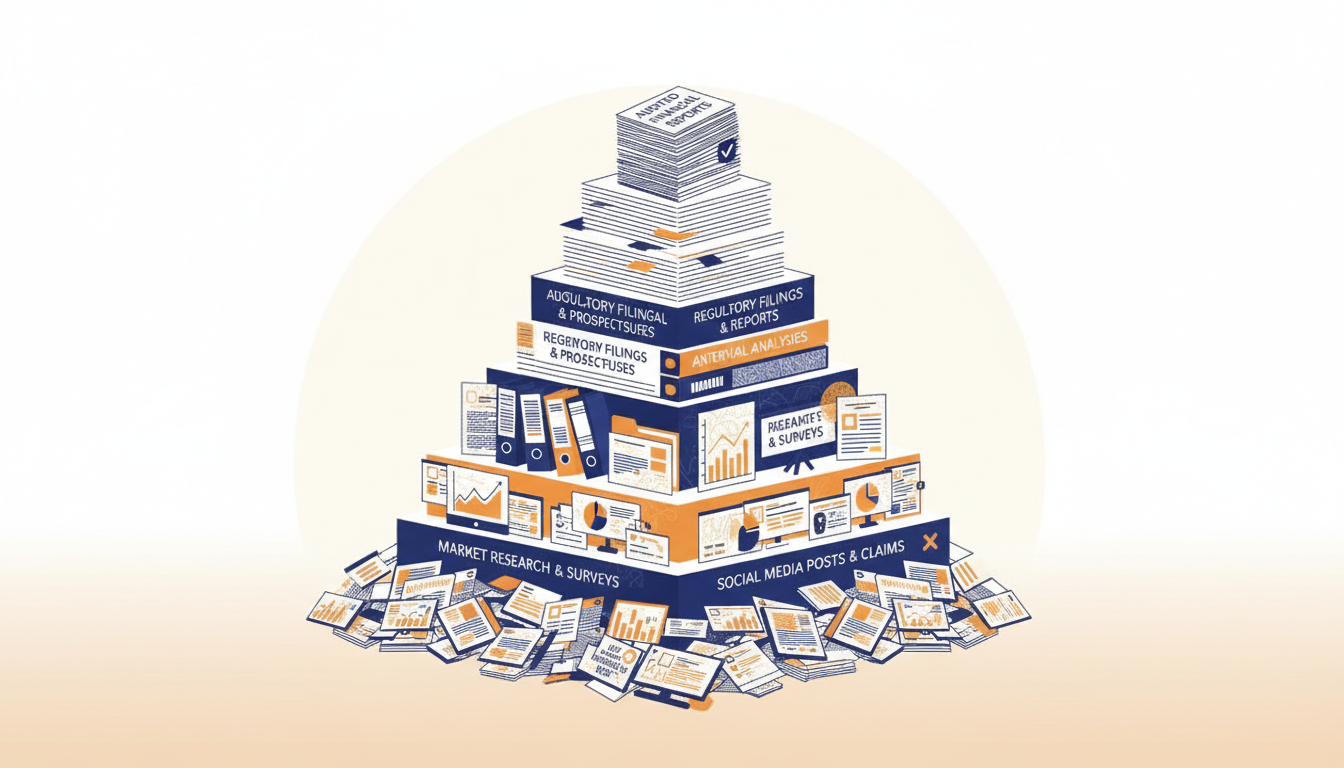
Use a Five-Level Source Hierarchy
- Audited annual reports, exchange filings, prospectuses, and audited acquisition disclosures.
- Registrar filings, company master data, and statutory annual returns.
- Official transaction documents and investor communications.
- Reputable reporting that identifies the company, period, metric, and attributable source.
- Self-published websites, interviews, awards, testimonials, and social posts.
A level-five claim can begin research, but it should never be the only basis for treating someone as an experienced operator. If you need confidential peer perspective after checking the evidence, The 1% Club can complement, but not replace, a documented coaching fit.
Score Evidence Before You Score Chemistry
We score each prospect from zero to five on evidence quality, recency, relevance to the buyer’s business model, conflicts in the metric, and outcome transparency. A strong candidate should reach at least 20 out of 25, with no weak score for evidence quality.
- Evidence Quality: Is the company, role, and milestone independently documented?
- Recency: Does the record reflect a business reality that is still relevant?
- Relevance: Does the operator understand your service, product, marketplace, or team model?
- Conflicts: Does the claim confuse revenue with GMV, funding, valuation, or programme sales?
- Transparency: Can you see the entity, period, metric, and source without guessing?
Evidence is easier to apply when founders can discuss it with peers who understand the trade-offs of growth. Before joining any group, compare confidentiality, business-model fit, facilitation, and member expectations.
Ask These Questions Before You Buy
Ask for the legal entity, operating period, accountable role, financial year, and source behind a scale claim. Then ask what the person personally led, what type of business they understand, and how progress will be reviewed in your engagement.
These questions make coaching conversations more concrete. They also clarify whether you need tailored advice, practical implementation support, or a broader founder community. If peer learning is useful, compare the membership structure of an entrepreneur peer group.
What Support Fits a ₹50 Lakh Founder Who Wants to Scale Lean?
At this stage, most founders do not need a generic motivation programme. They need a clearer operating rhythm around positioning, sales, delivery capacity, visibility, and the decisions only the founder can make.
We encourage a simple distinction: private coaching is for tailored decision support and implementation accountability. A peer community is for perspective, challenge, relationships, and confidential learning with other owners. Both can help, but they should not be sold as the same thing.
When Private Coaching Is the Better Fit
Private work fits when your constraint is specific and immediate. You may need to redesign your offer, improve sales conversations, reduce founder dependence in delivery, or decide what not to hire for yet.
Look for a coach who can work with your actual numbers, customer journey, service capacity, and calendar. If you prefer learning with peers while retaining a focus on service-business realities, review service-founder masterminds.
When a Peer Community Is the Better Fit
A peer setting can be powerful when the main problem is isolation, recurring blind spots, or a lack of accountability outside your current team. It should give you thoughtful challenge, not just referrals or a room full of unrelated businesses.
Structured peer accountability can turn insight into decisions you actually keep. Before joining, ask how members are matched, how attendance works, who facilitates, whether competitors share a room, and how your goals remain private. Also ask whether the group expects referrals, reviews financial goals, or simply hosts informal networking. The answers affect whether its format supports your next stage of growth. If disciplined follow-through matters, compare founder accountability groups.
Use Fit, Not Fame, as the Final Filter
A meaningful operating record earns attention, not automatic trust. The right support for a ₹50 lakh business is the one that helps you make better decisions in your model, with clear measures and an implementation cadence you can sustain.
Why Work with Rohini Mundra?
At Rohini Mundra, we work with founders who want a calmer, more deliberate path from founder-led delivery to a business that can grow without consuming every decision. Our private coaching is not a substitute for due diligence, and we encourage you to use the same evidence standard on us that you use anywhere else. In our first conversations, we focus on your actual operating constraints: offer clarity, pricing, sales conversations, delivery capacity, visibility, systems, and the habits that keep the founder at the centre of every bottleneck. We then decide whether private work is the right fit, or whether a peer setting, a workshop, or a practical implementation sprint would serve you better. If you are already generating meaningful revenue and need help making the next decisions with more clarity and less burnout, start by sharing the facts of your business with our team.
FAQs on Indian Business Coaches with Operating Experience
Which Indian Business Coaches Built Their Own Companies?
Require public role evidence and a dated company milestone. Exclude followers, awards, testimonials, programme sales, and unlinked claims because none establishes operating accountability on its own.
How Do I Verify an Indian Business Coach’s Revenue Claims?
Request the legal company name, documented role, financial year, and metric. Then check an annual report, regulatory filing, acquisition disclosure, or attributable reporting before relying on it.
Which Business Coaches in India Have Real Operating Experience?
Look for sustained responsibility for a named entity, not advisory proximity. Strong evidence identifies what the person ran, when they ran it, what grew, and where records can be checked.
What Proves That a Business Coach Has Scaled a Company?
Proof combines a documented role with a dated financial or transaction milestone tied to one entity. Strong claims distinguish revenue from GMV, funding, valuation, and client results.