How to Start a Speech: A 4-Line Opening for School, College and Work
How to start a speech: give a one-breath greeting, one hook of 25 words or fewer, one sentence on why it matters, and one roadmap sentence, all within 18 to 45 seconds.
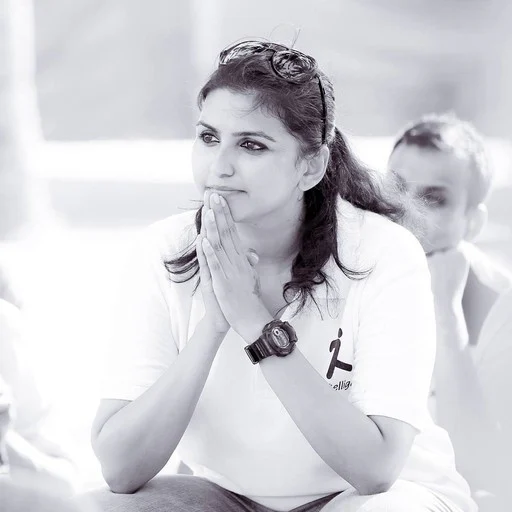
By Rohini Mundra, Founder · Updated 3 Oct 2026
Key takeaways
- To start a speech, say a greeting, one hook, one bridge sentence and one roadmap sentence in 35 to 90 words. At 120 words a minute, our planning assumption, that is 18 to 45 seconds.
- Address the most senior person in the room first, once. "Good morning" is a greeting, not a hook.
- Open with something true and specific to you, not a statistic, a quotation or a question about the topic.
- Memorise only the first two lines, then test the opening: first sentence 21 words or fewer, whole opening 18 to 45 seconds.
In this article
- 1How to start a speech: what are the four lines every opening needs?
- 2Which greeting should open a speech at a school assembly, a farewell, work or in Hindi?
- 3Which hook should open a speech: a joke, a story, a quote or a statistic?
- 4What should you cut from the opening of a speech?
- 5What if your mind goes blank on the first sentence of a speech?
- 6How do you test a speech opening before you stand up?
- 7When is a speaking coach worth it for your opening?
- 8Frequently asked questions
In 12 of the 13 well-known English-language speeches we read in October 2026 (our own small, hand-picked sample, listed under Sources), the first sentence ran to 21 words or fewer.
Length is not the hard part. The start of a speech is when the audience is most curious and least distracted, and it is also the moment a nervous speaker feels most exposed. A short opening that is written out and rehearsed handles both.
In our view, a weak start usually comes from writing the middle of the speech first and leaving the first sentence to the moment. That is the wrong way round. The first two lines are the only part worth memorising word for word.
Below is a fill-in opening, the right greeting for a school assembly, a farewell, a workplace or a Hindi-speaking room, four worked samples and five tests to run before you stand up.
How to start a speech: what are the four lines every opening needs?
Say four things in this order: a greeting that fits the room, one hook, one sentence on why the topic matters to this audience, and one roadmap sentence that says what you will cover. A hook is the single sentence or short moment that makes the audience want the next sentence. Then pause for two seconds.
Together, those four lines are the opening. Keep the opening to 35 to 90 words. At a deliberate 120 words a minute, which is our planning assumption and not a measured average, that is 18 to 45 seconds. Read yours aloud with a stopwatch, because every speaker's pace differs.
| Line | You say | It passes if |
|---|---|---|
| 1. Greeting | The address that matches the most senior person present | Said once, in one breath, with no second "Good morning" |
| 2. Hook | One true sentence: a moment, a plain admission, or a figure from your own work | 25 words or fewer, and you can say where it came from |
| 3. Bridge | "That matters because…" | Names something this audience cares about: marks, time, money, safety, a person |
| 4. Roadmap | "Today I will give you [number] reasons" or "one idea" | The number matches what you then deliver |
Four samples to adapt. The details are placeholders: swap in a true moment of your own.
Class talk, 39 words (about 20 seconds)
- Respected teacher and dear classmates,
- last exam week I slept four hours a night and forgot my own roll number.
- Sleep decides your marks too.
- Today I will give you three reasons sleep beats one more hour of study.
College farewell, 48 words (about 24 seconds)
- Respected Principal, honourable faculty and dear juniors,
- three years ago I could not find Room 14 on my first day.
- You are standing where I stood, so I will save you some time.
- Today I will tell you two things this college taught me that no timetable did.
Work update, 42 words (about 21 seconds), with your own details in brackets
- Good morning, [title] and everyone, and thank you, [name], for the introduction.
- One number changed our quarter: [figure].
- It decides whether [goal] happens on time.
- In five minutes I will show you two things: what changed, and what I need from you.
The class talk in Hindi, 53 words
- सुप्रभात। आदरणीय प्रधानाचार्य जी, सभी गुरुजन और मेरे प्यारे साथियो,
- परीक्षा के हफ़्ते में मैं रोज़ चार घंटे ही सोया और अपना रोल नंबर भूल गया।
- नींद आपके अंकों का फ़ैसला भी करती है।
- आज मैं आपको तीन कारण बताऊँगा कि नींद एक और घंटे की पढ़ाई से ज़्यादा काम की क्यों है।
Which greeting should open a speech at a school assembly, a farewell, work or in Hindi?
Address the most senior person in the room first, then everyone else, in one breath and once. Use "Respected Principal, teachers and dear friends" at a school or college, a greeting to the senior person and the room plus a thank-you to the chair at work, and the Hindi address that matches your room.
| Room | Greeting | Note |
|---|---|---|
| School assembly | Good morning, respected Principal, teachers and dear friends, | Say "Good morning" here and nowhere else in the opening |
| College or farewell | Respected Principal, honourable faculty, dear seniors and friends, | Swap "seniors" for "juniors" or "batchmates" to match who you are addressing |
| Workplace | Good morning, [senior person's title] and everyone, and thank you, [name], for the introduction. | Thank whoever introduced you in the same breath, then begin |
| Hindi-medium school or college | सुप्रभात। आदरणीय प्रधानाचार्य जी, सभी गुरुजन और मेरे प्यारे साथियो, (Suprabhat. Aadarniya pradhanacharya ji, sabhi gurujan aur mere pyaare saathiyo,) | Use नमस्कार at any hour and शुभ संध्या in the evening |
| Hindi farewell | नमस्कार। आदरणीय प्रधानाचार्य जी, सम्माननीय गुरुजन, मेरे साथियो और प्यारे जूनियर साथियो, | Name the Principal or chief guest first |
| Hindi workplace | सुप्रभात। आदरणीय [नाम] जी और सभी साथियो, [नाम] जी, परिचय के लिए धन्यवाद। | [नाम] is the most senior person present, then the person who introduced you |
A greeting that speaks directly to the room can carry the opening on its own. On 11 September 1893, Swami Vivekananda began his address to the World's Parliament of Religions in Chicago with five words, "Sisters and Brothers of America", and went straight to thanks: "It fills my heart with joy unspeakable to rise in response to the warm and cordial welcome which you have given us" (Belur Math). For a school speech, one warm sentence to the room after the formal address beats a second round of greetings.
Which hook should open a speech: a joke, a story, a quote or a statistic?
Open with something true and specific to you: a joke at your own expense, a one-sentence personal moment, or a plain admission. In the first 70 words, 8 of the 13 speeches we read opened with a joke, quip or dry admission and 4 with a personal story or parable. None opened with a statistic.
| Opening move in the first 70 words | Speeches (of 13) |
|---|---|
| Joke, quip or dry admission | |
| Personal story, scene or parable | 4: Adichie, Gilbert, Wallace, Bezos |
| Said what the talk would do | 3: Jobs, Adichie, Brown |
| Question to the audience (each set up a joke) | 2: Robinson, Pausch |
| Someone else's words (an unnamed person's quip about rain) | 1: Roberts |
| Statistic | 0 |
| Question about the talk's subject | 0 |
Five speeches are counted in two rows because their openings do both (Jobs, Adichie, Roberts, Robinson and Pausch), so the rows add to 18 for 13 speeches. We coded the first 70 words of each transcript ourselves. The sample is small and not random: well-known English-language speeches from one published collection of transcripts, delivered mostly in the US, including three TED (Technology, Entertainment, Design) talks. The median first sentence was 14 words, with a range of 2 to 66. The sample shows what experienced speakers do, not what suits a school assembly.
Our recommendation for a first-time speaker is one true sentence about a moment you lived, tied to the topic, as in the samples above. Three cautions:
- Story or moment: tie it to your point within one sentence. That is the bridge line.
- Show of hands: it feels safe, but the room may vote against your point or not respond at all.
- Statistic, quote or shayari (a short Urdu or Hindi poetic couplet): a statistic opens well only if you can say whose figure it is and why this audience should care, otherwise keep it for the body. A quote or shayari can open a speech only if you can finish "I chose it because…" in one sentence and it takes under ten seconds.
| Occasion | A hook that works | Skip |
|---|---|---|
| Class talk or assembly | A true moment from your own week | A statistic you cannot source |
| Farewell | A specific shared memory: a place, a teacher's phrase | An in-joke only your batch understands |
| Work presentation | One figure from your own data, then why the room should care | Housekeeping or slides first |
What should you cut from the opening of a speech?
Cut four things: apologies, housekeeping, a long self-introduction, and the filler sentence "It is a pleasure to be here today to talk to you about…". Each spends the opening seconds, when the room is most attentive, on nothing the audience can use.
- Apologies. "Please forgive my mistakes" announces the mistakes. Begin instead.
- Housekeeping (announcements such as "Can you hear me?" or "Please silence your phones"). Test the microphone before your name is called.
- A long self-introduction. If someone has introduced you, thank them and start. If not, give your name and why you are the one speaking in ten words or fewer.
- The filler sentence. Replace it with line 4, the roadmap with a number: "Today I will give you three reasons…".
What if your mind goes blank on the first sentence of a speech?
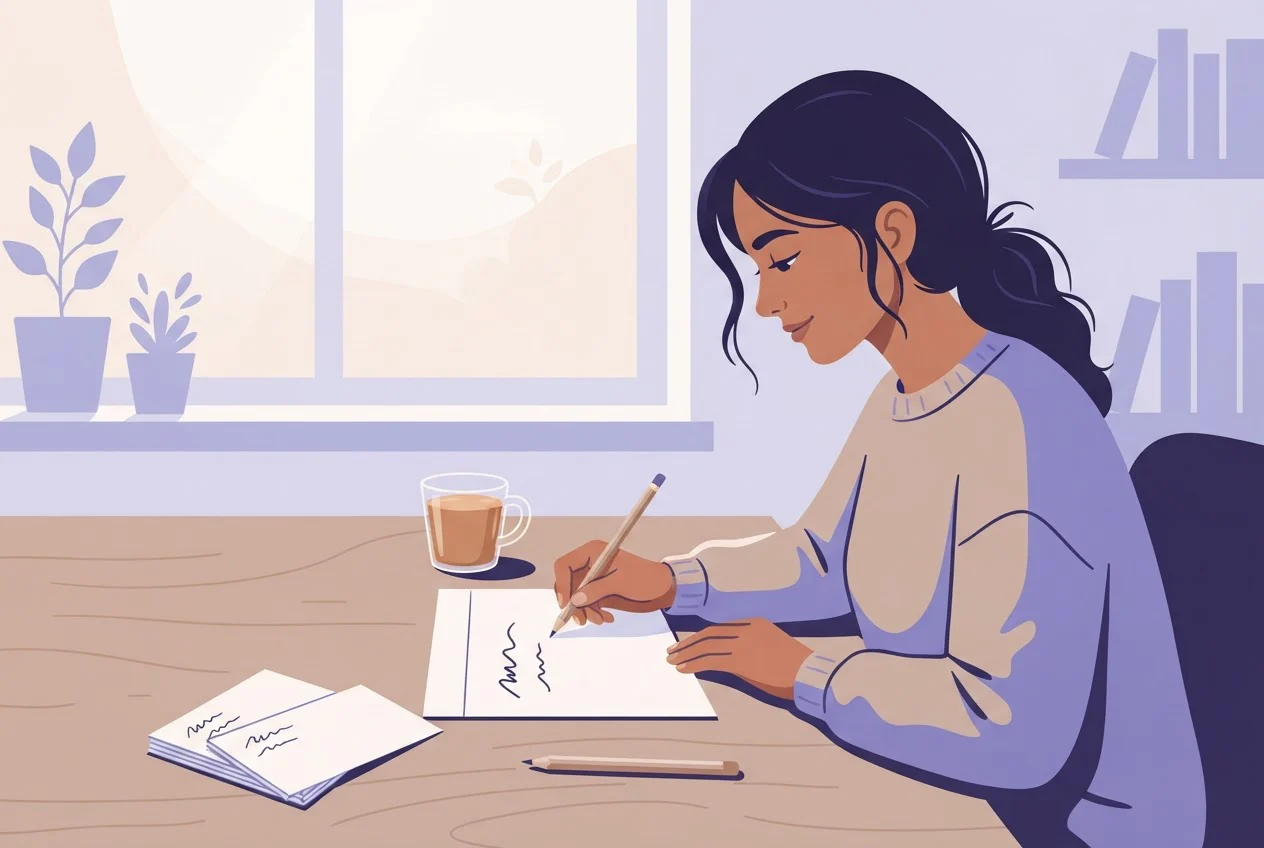
Write the first two lines word for word, say them aloud until they come without thought, and run the rest from key words. Memorising two lines is realistic. Memorising a whole speech fails the moment one word is lost. If the blank comes anyway, use the recovery steps below.
- Pick a cue word for each line.In the class talk: Respected, Last, Sleep, Today.
- Stand silent for two seconds.Look at the back row, breathe out, then speak.
- If line 2 goes, say line 4.The roadmap has your topic and your number in it, so you need no memory to say it. Go back to the hook afterwards if it matters.
- Say the first sentence slower than feels natural.A nervous speaker speeds up, and a short first sentence at a deliberate pace sounds sure.
How do you test a speech opening before you stand up?
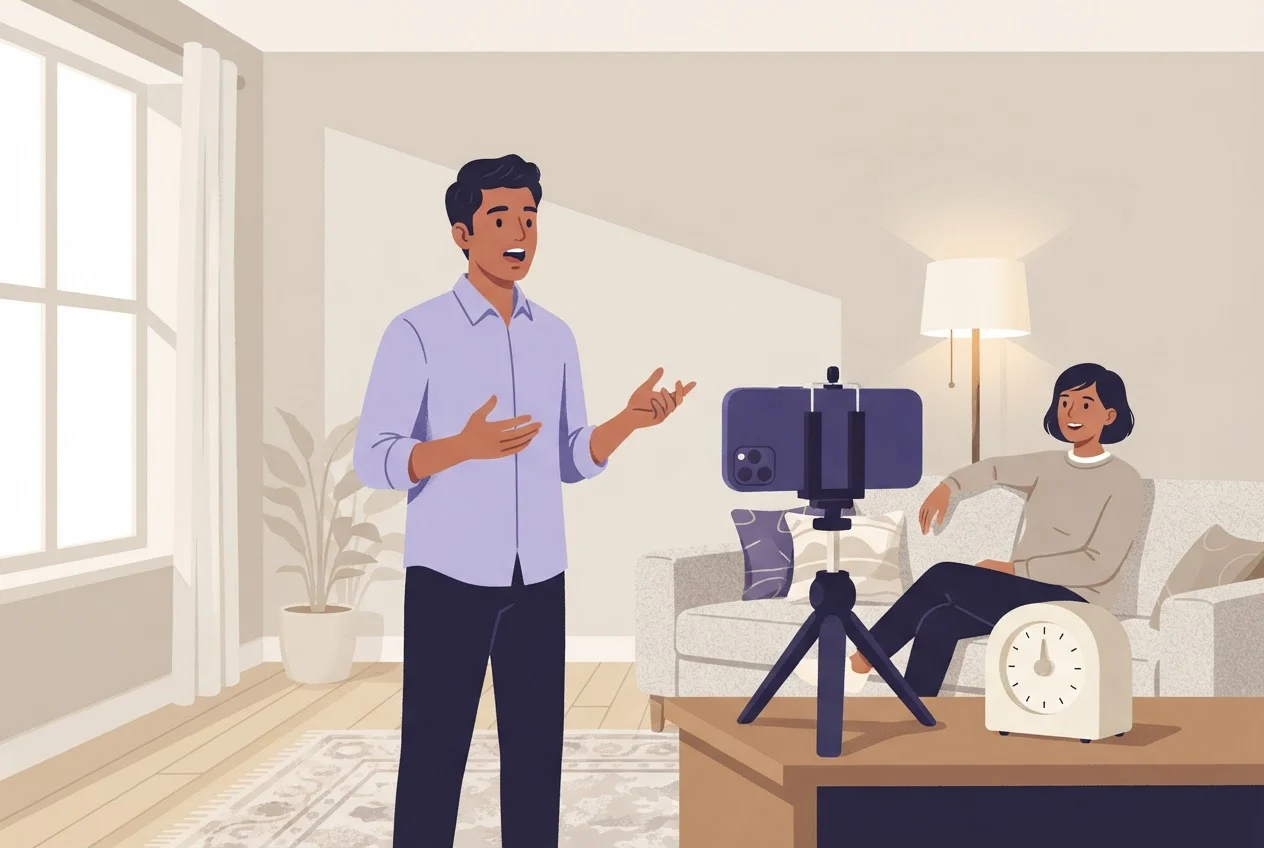
Run five tests aloud, standing up: count the first sentence (21 words or fewer), time the whole opening (18 to 45 seconds), check the hook (25 words or fewer and sourced), say it to someone unfamiliar with your topic, and record it. Each has a pass mark below. A silent read-through shows neither length nor pace.
- Count the first sentence.Pass: 21 words or fewer. Fail: 22 or more, so split it.
- Time the whole opening.Pass: 18 to 45 seconds. Fail: outside that range. If over, cut the longest line. If under, check all four lines are there.
- Check the hook.Pass: 25 words or fewer, and you can say when and where it happened or whose figure it is. Fail: either one missing.
- Say it to someone who does not know your topic.Ask: "What will I talk about, and how many points?" Pass: they name both. Fail: rewrite line 4.
- Record it on your phone and listen without video.Pass: nothing between greeting and hook except a breath. Fail: any apology, "um" or "okay, so".
When is a speaking coach worth it for your opening?
A coach is worth it when you speak regularly to clients, teams or stages and the same weak start repeats every time. A coach adds the most when the audience is paying, deciding or buying, because a second listener catches habits you cannot hear in your own voice. For a class talk, the four lines above are enough.
Our Workshops-Seminars are interactive workshops and seminars designed to help coaches, speakers, leaders, entrepreneurs and professionals realise their true potential: participants discover their niche, strengthen communication abilities and turn expertise into viable business ventures. See our corporate communication and leadership workshops, or read how to choose a public speaking coach before you commit to anyone. Rohini gave a TEDxDSCE talk (TEDxDSCE is an independently organised TEDx event at Dayananda Sagar College of Engineering, Bengaluru), Power of Rituals, published by TEDx Talks in 2017; there is more on our speaker page. Our video page has free resources.
Write your four lines tonight. If you speak for a living and want a second pair of ears, tell us your speaking situation and ask what would fit.
Want a second pair of ears on your opening?
Frequently asked questions
Sources
- 1.Toastmasters International: How to Hook Audiences from the Start (November 2025)
- 2.Belur Math: Swami Vivekananda's speeches at the Parliament of Religions, Chicago, 1893
- 3.Stanford News: Steve Jobs, 2005 commencement address
- 4.TED: Sir Ken Robinson, "Do schools kill creativity?"
- 5.Transcripts of the 13 speeches used for our count (read October 2026). All 13 come from James Clear's collection of speech transcripts and may differ slightly from the words as delivered:
- 6.Steve Jobs, Stanford 2005
- 7.Ken Robinson, TED2006
- 8.Chimamanda Ngozi Adichie
- 9.Brené Brown
- 10.Elizabeth Gilbert
- 11.David Foster Wallace
- 12.Randy Pausch
- 13.Jim Valvano
- 14.Neil Gaiman
- 15.George Saunders
- 16.John Roberts
- 17.Jeff Bezos
- 18.Charlie Munger, USC 2007