
Build a Coaching Business in India From a Clear First Offer
A practical sequence for turning experience into a defined coaching offer without making promises you cannot support.
6 chapters · Updated Sep 16, 2026 · By Rohini Mundra
In brief
Start a coaching business by defining one client problem, describing one paid offer clearly and setting written expectations before you seek scale. Build a simple online presence, run discovery calls as fit conversations and check the India-specific tax, registration and data responsibilities that apply to your situation.
Start with a coaching boundary, not a broad identity
Coaching needs a clear boundary because a client should be able to understand the kind of relationship they are entering. The International Coaching Federation defines coaching as a partnership that supports a client’s personal and professional potential, rather than a promise that the coach will solve every problem for them. Use that distinction to write a short scope statement: who you work with, the type of progress you support and what is outside your remit. The ICF Code of Ethics is a useful ethical reference even when you are deciding whether an ICF pathway is relevant to you.
A boundary also makes your marketing safer. Do not frame coaching as diagnosis, treatment, guaranteed transformation or a substitute for specialised professional support. When a prospective client needs help beyond your skills, scope or legal obligations, pause the sales conversation and guide them towards an appropriate qualified professional. That restraint protects the client and makes your positioning more believable. If your starting point is purpose-led, use evidence to test a purpose, passion and profit path rather than treating motivation alone as market proof.
Give one audience and one problem a clear first offer
Choose an audience you can describe without using a vague label such as “anyone who wants growth”. Then identify a recurring problem that audience can recognise in its own words. Your offer should name the intended work, delivery format, boundaries, support between sessions if any, payment terms and the next action a prospect can take. You do not need a catalogue of programmes to begin. You need a description that helps a prospective client decide whether a conversation would be relevant.
Treat discovery conversations as research as well as sales. Listen for the language people use to describe the problem, the stakes they attach to it and the support they expect. If the same issue does not recur, revise the audience or the problem before adding more delivery formats. This is especially important when you are starting alongside employment, where a smaller defined offer is easier to deliver consistently. This guide to becoming a life coach while working full time can support that decision.
Price the work only after you can state the terms
A coaching price should sit beside a clear description of the engagement, not beside an outcome claim. State what the client receives, what is excluded, when payment is due, how changes are handled and what happens if either party needs to end the engagement. Avoid using scarcity language, headline income promises or a price that you cannot explain in relation to the work. A first offer can be revised as you learn, but the terms should be understandable before a client commits.
The ICF ethics framework requires ICF professionals to co-create an agreement that includes roles, responsibilities, confidentiality and financial arrangements before coaching starts. That is a strong operating standard for any new practice: put the agreement in writing, discuss it before payment or delivery, and give the prospective client room to decide. Ideas for coaching businesses in India can help you assess whether the offer itself has enough evidence behind it.
Use discovery calls to check fit, not to force a yes
A useful discovery call begins with the client’s situation, desired change and expectations of support. Explain your coaching boundary, ask what they want from the conversation and listen for whether the problem fits the offer you have described. If the fit is real, walk through the scope, agreement, confidentiality approach, financial terms and next step. If it is not, say so plainly. A respectful no protects your time and avoids enrolling a client into work that is poorly matched from the start.
Do not use a discovery call to imply that coaching will produce a guaranteed business, health, relationship or career result. The ICF Code of Ethics says ICF professionals must make true and accurate statements about what they offer and coaching’s potential value. That standard supports a calmer sales conversation: explain the process and let the client make an informed choice. The ICF Code of Ethics also supports clear agreements before coaching begins.
Build an online presence that helps a prospect decide
Your first online presence can be small: a page that says who you help, what the first offer covers, how to request a conversation and how client information is handled. Google’s guidance favours helpful, reliable, people-first content over content created mainly to manipulate search rankings. It also encourages clear sourcing and author background where readers would expect them. Write for the person deciding whether to contact you, not for an imagined algorithm. Google’s people-first content guidance is the relevant standard.
A Google Business Profile is not a default requirement for an online coach. Google says a business must make in-person contact with customers during stated hours to qualify, so an online-only practice without a visitable location or in-person service is ineligible. If your page collects contact details, plan for a clear data notice and review the phased Digital Personal Data Protection Rules before their applicable provisions commence. The notification sets an eighteen-month commencement period for most processing provisions after November 2025. Google’s Business Profile eligibility guidance explains the location rule.
The checks that make a first offer credible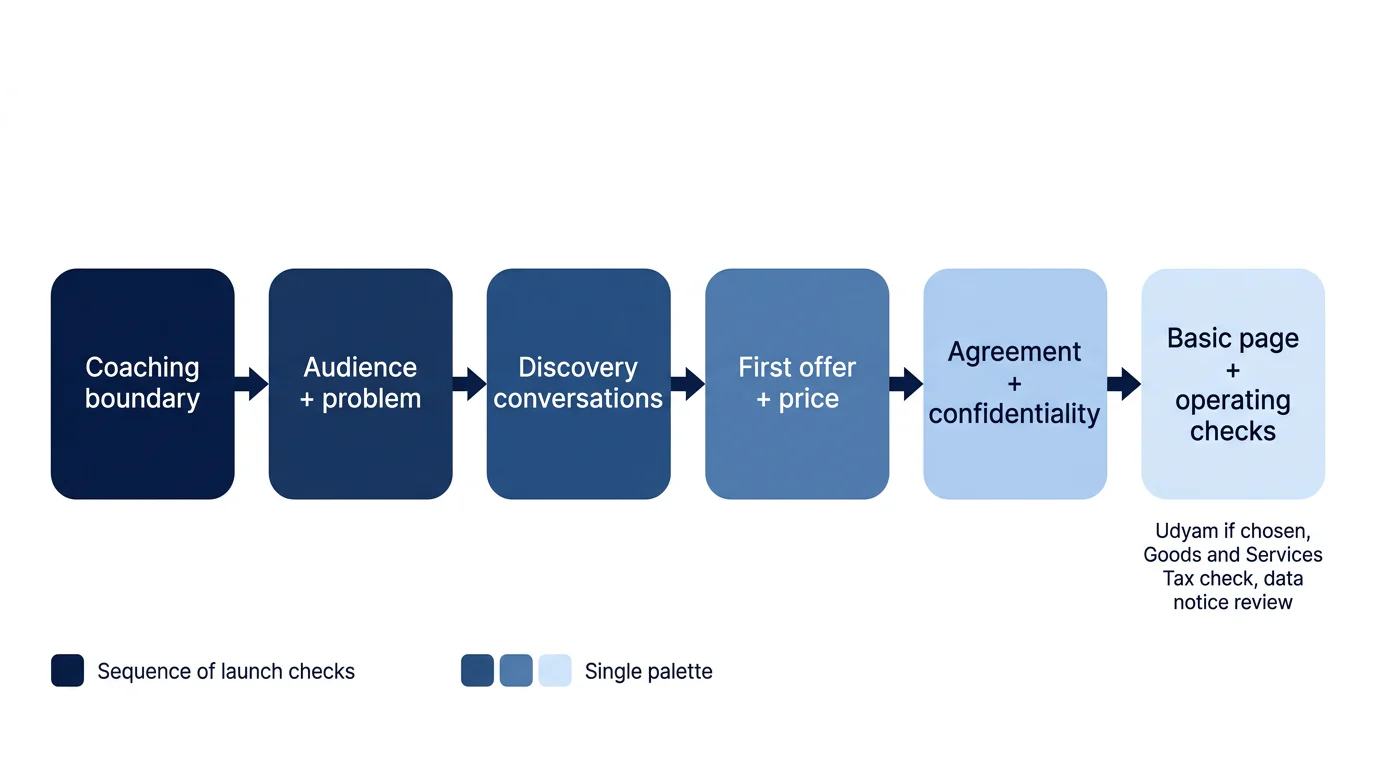
Complete the India operating checks before you invite payment
If you choose Udyam registration for an MSME, use the official portal. The Ministry of MSME says the process is online, paperless, self-declared and free, with no renewal required for the certificate. Do not pay an intermediary merely to access the registration route. Whether Udyam is appropriate for your business structure is a decision to make with appropriate professional advice, not an automatic launch task. The official Udyam portal sets out the process.
Check Goods and Services Tax obligations before the practice reaches the relevant threshold or enters an exception. CBIC’s published update gives service suppliers a ₹20 lakh aggregate-turnover threshold, and a ₹10 lakh threshold for Manipur, Mizoram, Nagaland and Tripura. Tax registration can have exceptions and your facts may differ by supply, location and structure, so use this figure as a prompt to obtain qualified advice rather than as a complete compliance answer. Keep invoices, payment records and client agreements organised from the beginning.