Public Speaking for Introverts: Tired or Scared? A 6-Question Check
Public speaking for introverts needs one of two plans: an energy plan if talks leave you drained, or a fear ladder if dread comes first. A six-question check tells you which.
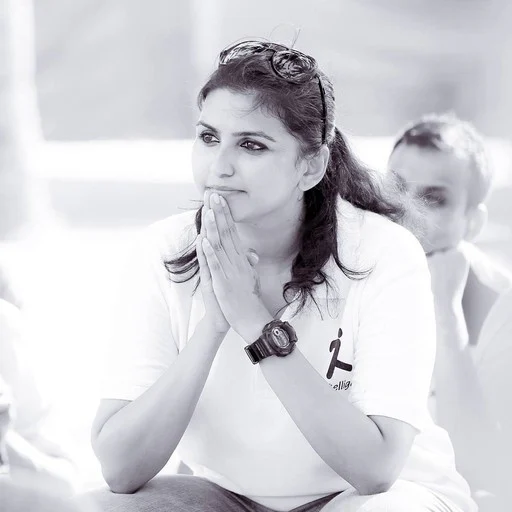
By Rohini Mundra, Founder · Updated 4 Nov 2026
Key takeaways
- Introversion and fear of speaking are separate problems. Tiredness after a talk calls for an energy plan, and dread before it calls for a step-by-step fear ladder.
- Social anxiety disorder goes with lower extraversion, but many people with it are not strongly introverted, so being an introvert does not tell you whether speaking frightens you.
- You do not need to act like an extrovert on stage. Clear structure, a slower pace and pauses work better than extra volume.
- If fear is making you avoid talks that matter to your work or studies, see a doctor or psychologist. Practice alone may not be enough.
In this article
- 1Are you tired or scared? A 6-question check for introverts who speak
- 2Why does public speaking for introverts need two different plans?
- 3What is the best energy plan for an introvert who is drained after speaking?
- 4How does an introvert who fears speaking build confidence step by step?
- 5When should an introvert see a professional instead of practising?
- 6How do we help introverts who want to speak for a living?
- 7Frequently asked questions
Introvert, shy and afraid of speaking are three different things, and most advice treats them as one. Introversion describes where your energy comes from: time alone refills it, and time with people drains it. Fear of speaking is about being judged. You can have either one without the other.
A speaker who is fine on stage but flat for a day needs a quieter next morning; one whose heart pounds for a week needs smaller first steps. If you avoid every chance to speak, rest will not help. You need to get used to speaking, in small steps.
The check takes two minutes and uses your last real talk as the test. The plans that follow are short enough to start this week. Where practice is not enough, we say so, and we say what we offer to introverts who want to speak for a living.
Are you tired or scared? A 6-question check for introverts who speak
Answer six questions about your last talk or your last contribution in a meeting, and mark each T (tired) or S (scared). Leave a row blank if neither fits. More of one letter tells you which problem to fix first. Use what actually happened, not a guess about how you would feel.
| # | Question about your last talk | Mark T if | Mark S if |
|---|---|---|---|
| 1 | In the hour after you finished, how did you feel? | Drained but calm | Replaying what you said and how you looked |
| 2 | Did one quiet hour alone fix it? | Yes, by evening | No, the replay carried into the next day |
| 3 | Which is harder: a prepared 10-minute talk to a full room, or an open 60-minute discussion in a small group? | The long discussion | The prepared talk |
| 4 | In the last month, when a chance to speak came up, what happened? | I spoke up, but I needed a day to recover | I stayed silent or turned it down because of how it might go |
| 5 | Before you spoke, what did you notice? | Mostly a wish to be left alone | A pounding heart, shaking, sweating or blushing |
| 6 | After each of the last three times you spoke in the same setting, how did you feel? (Leave blank if you have spoken fewer than three times.) | Drained each time, however calm I was beforehand | The dread beforehand stayed as high each time |
How to read your score.
- More T than S: use the energy plan below.
- More S than T: use the fear ladder.
- Equal numbers of three or more: run the energy plan for your next talk and start the ladder at rung 1.
- Fewer than three of either letter: neither problem stands out.
This self-check is our own design, not a validated test, and it is not a diagnostic.
Why does public speaking for introverts need two different plans?
Introversion and fear of speaking overlap but are not the same thing, and the research shows it from two directions. Low extraversion goes with social anxiety, but many people with the disorder are not strongly introverted.
A meta-analysis of 175 studies published between 1980 and 2007 (a study that pools results from many studies) compared people with social phobia, the older name for social anxiety disorder, with people without it. The disorder means intense fear of being judged in everyday social situations. The group with social phobia scored lower on extraversion by about 1.3 standard deviations (the typical spread of scores, so a gap above 1 is large). Across all the disorders studied, people with a diagnosis averaged about 1.65 standard deviations higher on neuroticism (the tendency to feel anxiety and other negative emotions), while social phobia showed one of the largest drops in extraversion (about 1.31 standard deviations lower).
The second source is a 2020 study in PLOS ONE of 265 people with social anxiety disorder and 164 people without it. It sorted the patients into three personality groups: 33% with the lowest extraversion, 29% with similarly low extraversion, and 38% with the highest extraversion of the three groups, though still below the healthy comparison group. By our arithmetic (33% + 29%), 62% sat in the two low-extraversion groups.
The Kotov and PLOS ONE results are group results from people with a diagnosis, so they do not describe every introvert. Our inference is that introversion tells you how you recharge, not whether a stage frightens you. Do not assume your tiredness is fear, or that your fear is just your personality.
What is the best energy plan for an introvert who is drained after speaking?
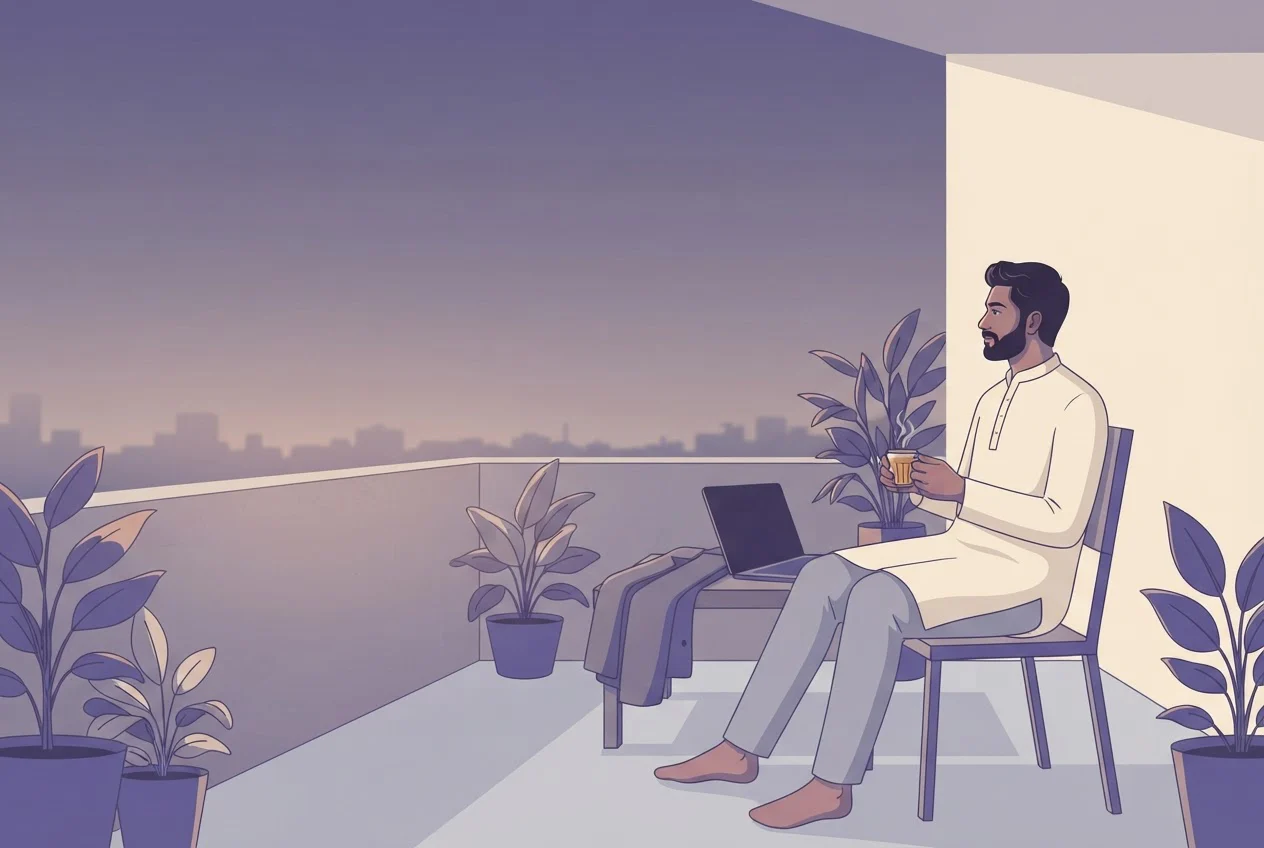
Plan the four days around the talk, not just the hour on stage. A talk costs more than its clock time: you spend attention on a whole room, and the preparation before and the replay after add to it. Protect quiet time on both sides.
- Two days beforeKeep one evening free of plans.
- The day beforeSay the talk aloud twice, time it, then stop rehearsing.
- Talk dayArrive 15 minutes early and stand in the room alone before people come in.
- Straight afterBlock 30 to 60 minutes alone before anything else, and avoid back-to-back meetings.
- The next dayKeep half the day light.
For open-ended discussions, agree an end time in advance. A fixed finish is easier to plan around than an open-ended hour.
Pass: by the evening after the talk you feel flat at worst, and by the next morning you feel normal. Fail: you are still flat after 48 hours (our recommendation for the cut-off), or the replay in your head has not stopped. Re-run the check, because fear (S) is probably part of the picture.
How does an introvert who fears speaking build confidence step by step?
Climb a seven-rung ladder, one rung a week, with up to three attempts that week, and score your dread before and after each attempt. Our recommendation, based on how exposure therapy (facing a feared situation in graded steps) works, is to get used to speaking in small steps. Each rung should feel slightly uncomfortable, not overwhelming.
- Say one sentence in a meeting you already attend.
- Give a two-minute update to one colleague or classmate.
- Give the same update to three people.
- Give a five-minute update in a team meeting.
- Take questions after it. Our 30-second plan for impromptu speaking gives you a structure for answers you did not prepare.
- Give a ten-minute talk with slides.
- Give a talk with unscripted questions, record it, and review the first 90 seconds with our body-language self-audit.
Rate your dread from 0 to 10 before and after every attempt, using the Predict, Do, Score method in our guide to stepping out of your comfort zone. Our recommendation is to move up when your before-rating has dropped by two points from your first attempt on that rung, or after three attempts. If three attempts bring no drop, go back a rung and read the next section.
To practise with feedback, ask a colleague to watch your rung 4 update and score it on pace and pauses.
When should an introvert see a professional instead of practising?
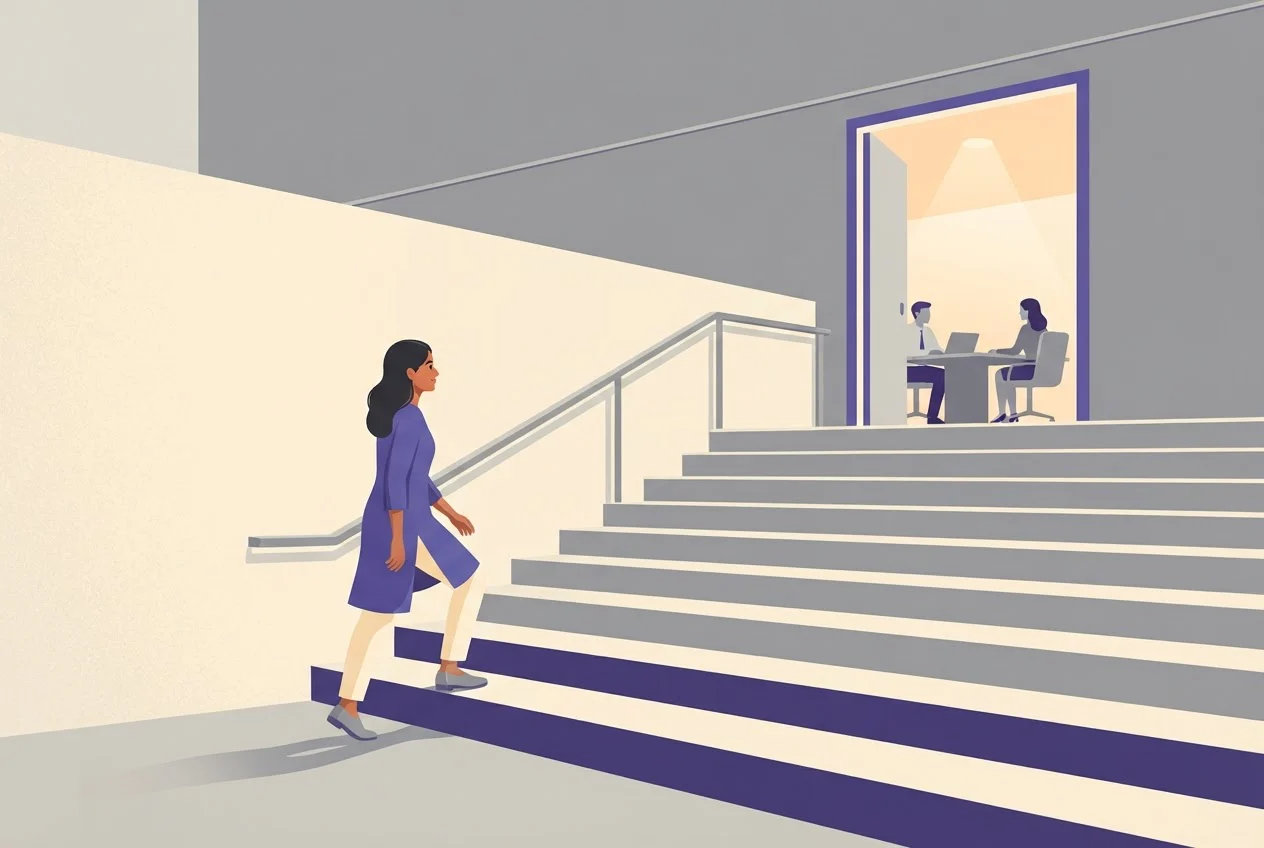
See a doctor or psychologist when fear makes you avoid speaking, studying or working in ways that cost you, or when you get physical symptoms such as a racing heart, trembling or blushing. These can be signs of social anxiety disorder, which is treatable and is not a personality flaw.
The US National Institute of Mental Health (NIMH) lists speaking in public among the situations that can trigger social anxiety disorder, and names blushing, sweating, trembling and a rapid heart rate as symptoms. Its page, revised in 2025, says treatment typically involves psychotherapy, medication, or both. The psychotherapies it names are cognitive behavioural therapy (CBT) and acceptance and commitment therapy (ACT).
Our rule: if you marked S on questions 4 and 5 and you have turned down talks that would have helped you, speak to a professional before or alongside the ladder. We are coaches, not clinicians, and coaching does not replace treatment.
How do we help introverts who want to speak for a living?
We offer two routes. Our Private Coaching runs for three months, and the XtraOrdinary Speaker's Academy Masterclass is for people who want to become speakers, trainers or coaches. Private Coaching starts with Inner Awareness, which is about understanding your nature. The Masterclass starts with a goal roadmap.
Private Coaching is a three-month programme. Month 1, Inner Awareness, is about understanding your nature and quieting overthinking. Month 2 is Soul and Karma. Month 3, Living the Wisdom, is about applying what you have learned in real life, under real pressure.
The XtraOrdinary Speaker's Academy Masterclass is a four-step system for people who dream of becoming a speaker, trainer or coach. The steps are Crystal Clear Roadmap, Create Your Warrior Blueprint, Find Your Topic and Speak Like a Star. The last step is about the art of public speaking and communication, to help you become confident.
As of November 2026, the XtraOrdinary Speaker's Academy Masterclass costs ₹1,50,000 (see Masterclass fees). Private Coaching is priced on request; see programme prices.
Share your check score and your next talk through the contact form, or write to rohinimundra@rohinimundra.com.
Want to speak for a living as an introvert?
Frequently asked questions
When physical symptoms such as a racing heart, trembling or blushing come with avoiding talks, it is time to ask a doctor. The NIMH page on social anxiety disorder names public speaking as a trigger, and says treatment typically involves psychotherapy, medication, or both.
Sources
- 1.Kotov, R., Gamez, W., Schmidt, F. and Watson, D. (2010). Linking "big" personality traits to anxiety, depressive, and substance use disorders: a meta-analysis. Psychological Bulletin, 136, 768 to 821., PubMed, US National Library of Medicine
- 2.Costache, M. E. and colleagues (2020). Higher- and lower-order personality traits and cluster subtypes in social anxiety disorder. PLOS ONE, published 29 April 2020., PLOS ONE
- 3.Social Anxiety Disorder: More Than Just Shyness, US National Institute of Mental Health, 2025