Personal Branding Coaching for Experienced Professionals: Who Helps Build Visibility?


TL;DR
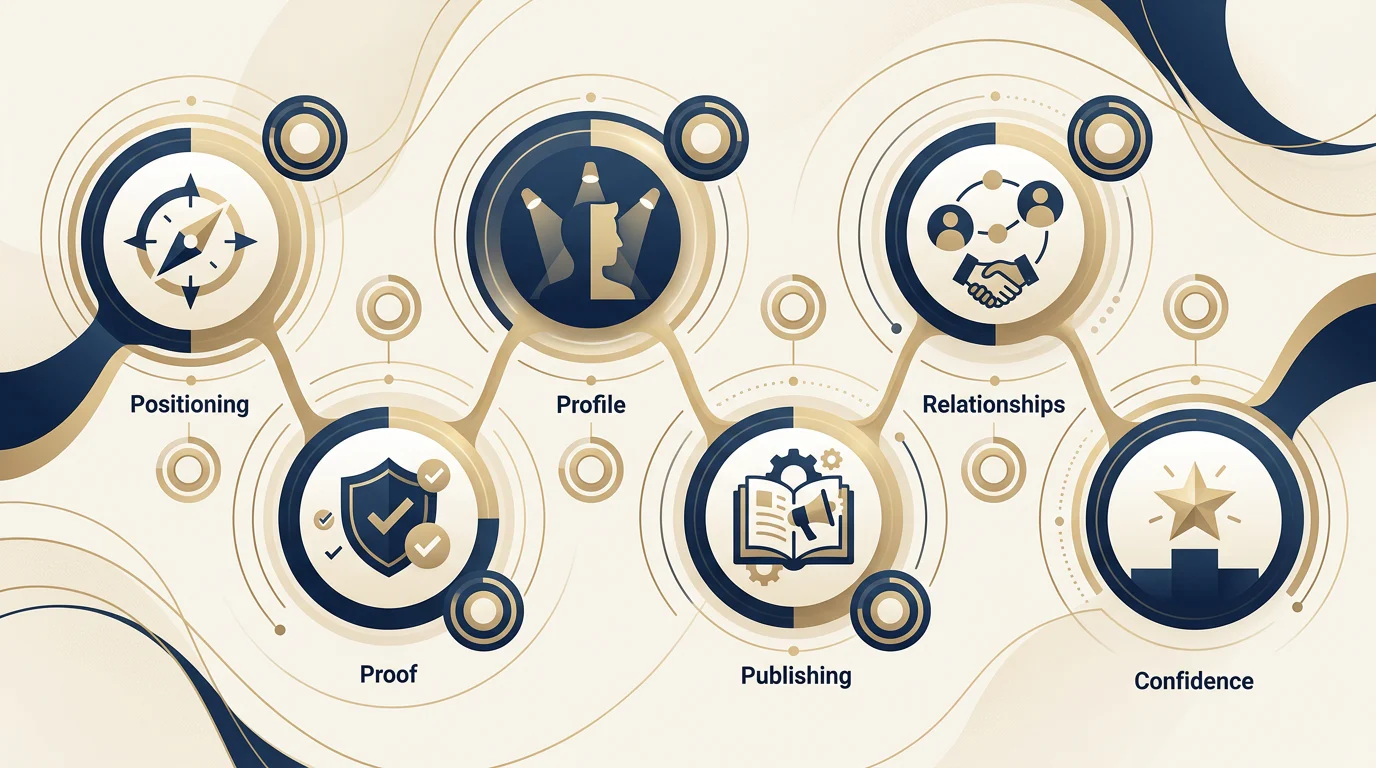
We help experienced professionals choose personal branding coaching by diagnosing the real visibility gap first: positioning, proof, profile credibility, publishing, confidence, or relationships. This guide compares six forms of support, explains what a credible engagement should deliver, shows how to evaluate LinkedIn help, and gives practical questions to ask before committing.
In two peer-reviewed studies involving 477 professionals, personal-branding activity was associated with career satisfaction through perceived employability, not a guaranteed promotion or revenue result. The useful lesson from the peer-reviewed study is that visibility should make real capability easier to recognise.
For personal branding coaching for experienced professionals, we recommend matching the help to the missing layer: a strategist for positioning, a LinkedIn specialist for profile credibility, an executive coach for confidence, a ghostwriter or content coach for publishing, or a structured program for a defined foundation.
We explain how to diagnose that gap, compare the available support, and choose an engagement that creates usable assets instead of broad visibility advice.
Who Can Help Experienced Professionals Build Visibility from Zero?
Starting from little public visibility does not mean starting from no expertise. It usually means experience, proof, and judgement have not yet been organised into a message that the right people can quickly understand, remember, and repeat.
There are many people selling coaching, which makes a clear selection method essential. The ICF study estimated 109,200 coach practitioners worldwide in 2022, so credentials alone do not tell you who can solve your particular visibility problem.
| Provider Type | Best When You Need | Primary Working Outcome | Less Suitable When |
|---|---|---|---|
| Personal Brand Strategist | Clear positioning, audience, and differentiation | A credible market promise and proof plan | Your strategy is settled and only profile execution is missing |
| LinkedIn Specialist | Profile credibility and platform-specific visibility | A stronger profile, proof signals, and measurement baseline | You cannot yet explain whom you help or why it matters |
| Executive Coach | Greater confidence and influence in high-stakes settings | A clearer leadership narrative and stronger communication | Public proof and content assets are the immediate priority |
| Ghostwriter | Help turning approved expertise into publishable drafts | Finished content shaped from your ideas and evidence | You have no point of view, proof, or approval capacity |
| Content Coach | Editorial skill and a sustainable publishing practice | Content pillars, feedback, and a working rhythm | Your positioning needs fundamental work first |
| Structured Program | A defined foundation with stable goals | A sequenced build of positioning, profile, proof, and workflow | Your role, offer, or audience changes every few weeks |
The right route also depends on the professional situation. Mid-career employees often need an internal influence narrative before public thought leadership. Independent consultants need a clear commercial position and proof that supports buyer conversations. Executives may need a risk-aware public voice, while career changers need help translating transferable evidence for a new audience.
- Mid-Career Employees: Choose support that strengthens stakeholder recognition, promotion narratives, and credible expertise within the organisation.
- Independent Consultants: Choose support that connects positioning, proof, content, and relevant conversations with prospective buyers.
- Executives: Choose support that respects confidentiality, leadership responsibilities, and the higher stakes of public claims.
- Career Changers: Choose support that identifies transferable proof before rewriting a profile around an untested identity.
If you are deciding between a defined build and platform-focused support, our format comparison can help you separate the two.
What Visibility Gap Should You Solve First?
We start with diagnosis because more posting cannot repair an unclear offer, weak evidence, or a profile that points in the wrong direction. Score each area from 0 to 2, where 0 means missing, 1 means usable but incomplete, and 2 means clear, credible, and repeatable.
Positioning and Proof
Score your positioning clarity by asking whether a relevant person can understand your audience, the problem you solve, and your distinctive approach without needing a long biography. Score proof by listing client outcomes, projects, credentials, recommendations, presentations, publications, or leadership results you can ethically share.
A total of 0 to 4 suggests foundation work first. A total of 5 to 8 suggests targeted specialist help. A total of 9 to 12 means the fundamentals exist and the priority is activation, feedback, and relationship building.
Profile Quality and Publishing Consistency
A profile should make your expertise legible, not merely list every role you have held. LinkedIn says a complete profile can improve discoverability, and members with a profile photo receive up to 2 times more profile views, according to its profile guidance.
Score profile quality through your headline, About section, relevant experience, proof samples, skills, recommendations, and clear next step. Score content consistency through the presence of a realistic workflow, not an ambitious posting schedule that will disappear during a busy month.
Network Relevance and Confidence
Network relevance means the people finding, following, and speaking with you are connected to the opportunities you want. Confidence means you can explain your value clearly in a conversation, not simply that you are willing to publish.
Use the lowest score to choose the provider type. Our zero-visibility guide can help you turn that result into a practical first move.
What Should Personal Branding Coaching Deliver?
A credible engagement should leave you with work you can use independently, not only a collection of encouraging conversations. Before signing, ask for a written scope that identifies what will be created, reviewed, approved, and handed over.
The core checklist should include:
- Positioning Statement: A concise explanation of the audience, consequential problem, approach, and reason to believe you.
- Audience Definition: A practical description of whose attention matters, including role, context, and priority problems.
- Proof Inventory: A documented set of evidence, examples, credentials, outcomes, and stories that support your message.
- Profile Messaging: Headline, About, experience framing, proof signals, and a coherent call to action.
- Content Pillars: A limited set of repeatable themes linked to real expertise and audience concerns.
- Publishing Workflow: A sustainable process for ideas, drafting, review, approval, publishing, and response.
We also look for agreement on feedback speed, revision boundaries, confidentiality, ownership, fees, and exit terms. The ICF ethics code likewise emphasises clear agreements covering roles, responsibilities, financial arrangements, confidentiality, and termination conditions.
A defined program can suit stable goals, while flexible support suits professionals whose audience or direction is still changing. See our three-month comparison before assuming one format is universally better.
Is LinkedIn Help Enough to Build a Recognizable Professional Brand?
LinkedIn help is enough when profile credibility, platform-specific content, and relevant professional relationships are the main constraints. It is not enough when the audience, market promise, proof, or career direction is unclear, because those decisions should shape the profile and publishing system.
We treat LinkedIn as a professional proof and distribution surface, not as the entire brand. In a 2024 survey of 3,484 global business executives, 73% of decision-makers said thought leadership was more trustworthy than marketing materials when assessing capability, according to thought leadership research.
A useful LinkedIn engagement should cover five areas:
- Profile Audit: Review whether the headline, About section, experience, and Featured proof support one coherent professional promise.
- Credibility Signals: Add relevant work samples, recommendations, expertise markers, and evidence that help visitors assess capability.
- Content System: Establish themes, source material, review standards, and a publishing rhythm that fits available time.
- Relationship Building: Identify relevant peers, buyers, leaders, collaborators, and communities, then create a thoughtful engagement routine.
- Meaningful Measures: Track search appearances, profile engagement, relevant follower demographics, qualified conversations, and attributable opportunities.
For professionals balancing internal influence with external recognition, our visibility guide explains why the two goals need different evidence and measures.
How Do You Compare Personal Branding Support Options?
Compare options against the gap you diagnosed, not against the loudest promise or the largest audience. A good comparison is specific about audience, starting point, scope, support depth, and commercial terms.
Compare the Starting Point
The table below is a decision tool, not a price list. We do not recommend assuming a fee, duration, revision allowance, or response time until the provider confirms it in writing.
| Provider Type | Best Audience | Starting Point | Primary Output | Duration | Delivery Format | Hands-On Support | Price To Confirm |
|---|---|---|---|---|---|---|---|
| Personal Brand Strategist | Professionals with unclear market positioning | Broad or inconsistent message | Positioning and proof architecture | Written scope | Workshops or one-to-one sessions | Strategic review | Total fee, revisions, and handover |
| LinkedIn Specialist | Professionals with clear expertise but weak profiles | Existing message, weak platform execution | Profile and content-system improvements | Written scope | Audit, edits, and review sessions | Profile and draft feedback | Total fee, platform work, and support period |
| Executive Coach | Senior leaders needing influence and confidence | Strong experience, high-stakes communication gap | Leadership narrative and practice | Written scope | Confidential one-to-one coaching | Conversation and decision support | Total fee, confidentiality, and cancellation |
| Ghostwriter | Time-constrained experts with approved material | Clear ideas and usable proof | Edited drafts and publishing assets | Written scope | Interviews, drafting, and approvals | Drafting and revisions | Per-piece or retainer total, rights, and revisions |
| Content Coach | Experts who need publishing capability | Clear position, inconsistent practice | Content pillars and editorial workflow | Written scope | Coaching and draft review | Skill-building feedback | Total fee, feedback cadence, and access |
| Structured Program | Professionals with stable goals and a foundation gap | Defined audience, proof, and available time | Sequenced visibility foundation | Published or written scope | Curriculum, group, or private delivery | Confirm live and async access | Total fee, taxes, cancellation, and included support |
Verify Evidence and Terms
Ask for relevant experience, anonymised sample work where confidentiality applies, a clear methodology, and testimonials with enough context to understand what actually changed. Treat follower counts and vague praise as weak evidence when the goal is professional credibility.
The FTC rule addressing deceptive reviews and testimonials took effect in October 2024. Its FTC guidance is a useful reminder to examine claims carefully, including whether testimonials are representative and whether incentives or referral relationships were disclosed.
Test Fit Before Committing
A discovery conversation should help you assess whether the provider listens for the real constraint or simply recommends their preferred format. Where possible, test the working relationship through a small paid diagnostic, a profile review, or one defined artifact before committing to a longer engagement.
For a more careful review of published claims and evidence, read our reviews guide.
What Should You Ask Before Buying Personal-Brand Help?
Bring these questions to a discovery call and ask for answers in writing where they affect money, ownership, access, confidentiality, or cancellation. The goal is not to make the decision slower, but to ensure the engagement solves the actual constraint.
- Which audience and visibility outcome do you specialise in?
- What will you audit before recommending profile changes or content?
- Which exact assets will I receive and own at the end?
- How does your methodology adapt after the initial diagnosis?
- What relevant sample work or attributable outcomes can you show?
- Which live sessions, async reviews, and turnaround times are included?
- How much time must I protect each week?
- How will we measure progress beyond followers and impressions?
- Do you receive referral compensation or have conflicts I should know about?
- What are the total fee, taxes, cancellation, pause, confidentiality, and exit terms?
Price needs particular care. Published fees, availability, and scope can change, so compare the total commitment rather than a headline number. Our programme pricing guide explains why written confirmation matters before you enrol.
Build Your Visibility with Rohini Mundra
At Rohini Mundra, we help experienced professionals turn real work into a clear position, credible proof, and a visibility habit they can sustain alongside demanding roles. We begin with the gap, not a generic publishing calendar. In a focused diagnostic, we assess your audience, market promise, proof, profile, content capacity, and the relationships that matter. From there, we identify whether you need a defined build, targeted LinkedIn support, flexible coaching, or a different specialist entirely.
Our work is designed for people beginning with little public visibility, not for anyone chasing attention for its own sake. We do not promise follower counts, invitations, or revenue on a timetable we cannot control. Instead, we define the assets, feedback, weekly commitments, measures, ownership, and exit terms before work begins. If you want a practical decision before committing to broader personal branding coaching, contact us.
FAQs on Personal Branding Coaching
These questions address the decisions experienced professionals make when they have strong experience but limited public visibility. We answer them with practical selection criteria rather than generic encouragement.
Can a Personal Brand Strategist Help If I Have No Online Presence?
Yes. We identify your audience, promise, and usable evidence, then decide whether profile writing, content support, or relationship work should come first in your plan.
Is LinkedIn Coaching Enough for Experienced Professionals?
LinkedIn coaching is enough when platform execution is the main constraint. We recommend broader support when the role, audience, proof, or professional direction remains unclear.
What Should a Personal Branding Program Include?
We expect a positioning statement, audience definition, proof inventory, profile messaging, content pillars, publishing workflow, feedback rules, ownership terms, and measures tied to relevant opportunities.
How Should I Test a Coach Before Committing?
Use a discovery call or small paid diagnostic. Ask about deliverables, ownership, and exit terms, then choose based on evidence, fit, and realistic time capacity.